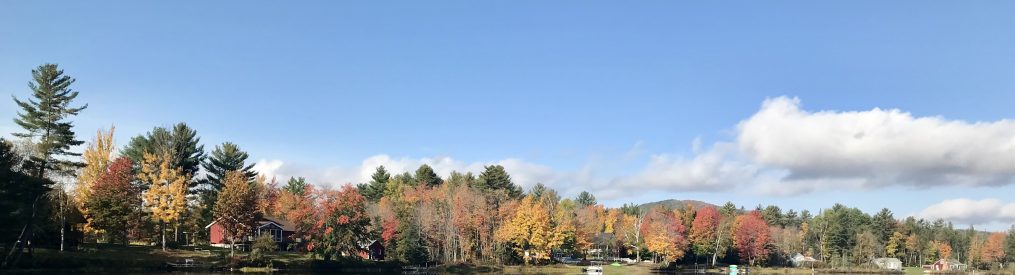
 Cricket’s chirp, small birds flit back and forth to the feeder in my parent’s back garden. My brothers and sister took the kids to the drive-in to see How to Tame a Dragon II and Maleficent. A temporary peace has settled on this early summer evening. Soon the fireflies will join me as I sit at the picnic table on the carport, thinking about the past week. My debut novel Calvin’s Head comes out exactly three months from today and everything is beginning to click into place.
Continue reading
writing
My Genre Identity Crisis
 “What do you write?”
A simple question, and the first most people ask when you tell them you’re a writer. Crime fiction, I say. But they usually want to know more. That’s where it can get tricky. From the start, I called my first book a psychological thriller. It’s how I pitched it to agents a couple years ago. After hearing the plot, one asked me, “Are the main characters gay?” “All of them except the dog,” I said. Her quick forced smile told me she was neither amused nor interested. I moved on.
Should I have said upfront it was a gay thriller? Was the gay aspect a reason another agent expressed concern about “our ability to sell this work”? As I thought about it, gay protagonists did seem a rarity in current mainstream crime fiction. In Jonathan Kellerman’s popular Alex Delaware series, the gay cop is almost a sidekick. What about other genres? And next I’m shifting gears with a ghost story, but the same main character. Switching genres within a series and a gay hero? Was I insane?
Whitman, Cunningham, and Myself
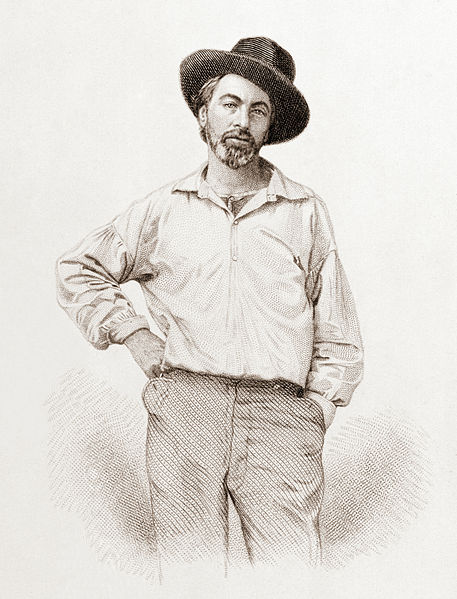
Whitman 1854
Walt Whitman would be delighted with all the attention paid to him on his birthday. In fact, I’ll go so far as to say that if he were alive today, he’d blog more often than Neil Gaiman, post more selfies than James Franco, and have more Twitter followers than Lady Gaga. Years ago when I visited Whitman’s home in Camden, New Jersey – now a museum – then curator Margaret O’Neill told me the poet was very concerned with how he would be remembered. So much so, he spent over $4000 on a memorial tomb that he designed for himself. (By today’s standard, around a million dollars.)
I came to Whitman’s poetry late – Dead Poets Society late. But more so ten years later when I read Gary Schmidgall’s biography Walt Whitman: A Gay Life. I made a two-part radio program featuring the author and my visit to the poet’s home. Since then, his poetry has often infused my work. But to be honest, I’ve never been able to sit down and read my battered 500-page copy of his epic life’s work Leaves of Grass from beginning to end.
Books That Go Bump in the Night

Inn at Whitefield
The northern New Hampshire inn where I’m spending the summer is haunted. I’ve not seen any first-hand evidence. But others report a recurring manifestation of dead flies in certain rooms; mysterious whistling in the kitchen; sudden loud knocks or extreme drops in temperature. A child played with an unseen friend. The dog refused to climb the Tower stairs. Oh, yes. A Tower. Any of these occurrences on their own might be explained. Put them all together? You don’t need to be Einstein to figure out the setting of my next book.
So one of the Saints and Sinners Literary Festival panels that grabbed my attention was The Devil You Don’t Know: Otherworldly Forces in Fiction.
Diversity on the Mississippi
 Before the Saints and Sinners Literary Festival began last weekend in New Orleans, the friend I stayed with took me to newly opened Crescent Park. We climbed the elegant rusted steel Piety Street Bridge (one block from Desire) to cross the railway tracks and explore the beautiful, if minimally designed, riverfront gardens. All that remains of a once bustling wharf is a lone three-story white wall and the burned out skeleton of beams extending over the muddy water. The city skyline glimmers in the distance. Rusty poles bearing words like Diversity are interspersed with concrete slab benches etched with quotations.
“Culture – The common threads of life that tie us together… roles, rules, rituals, languages, music, spirituality, and soul.”
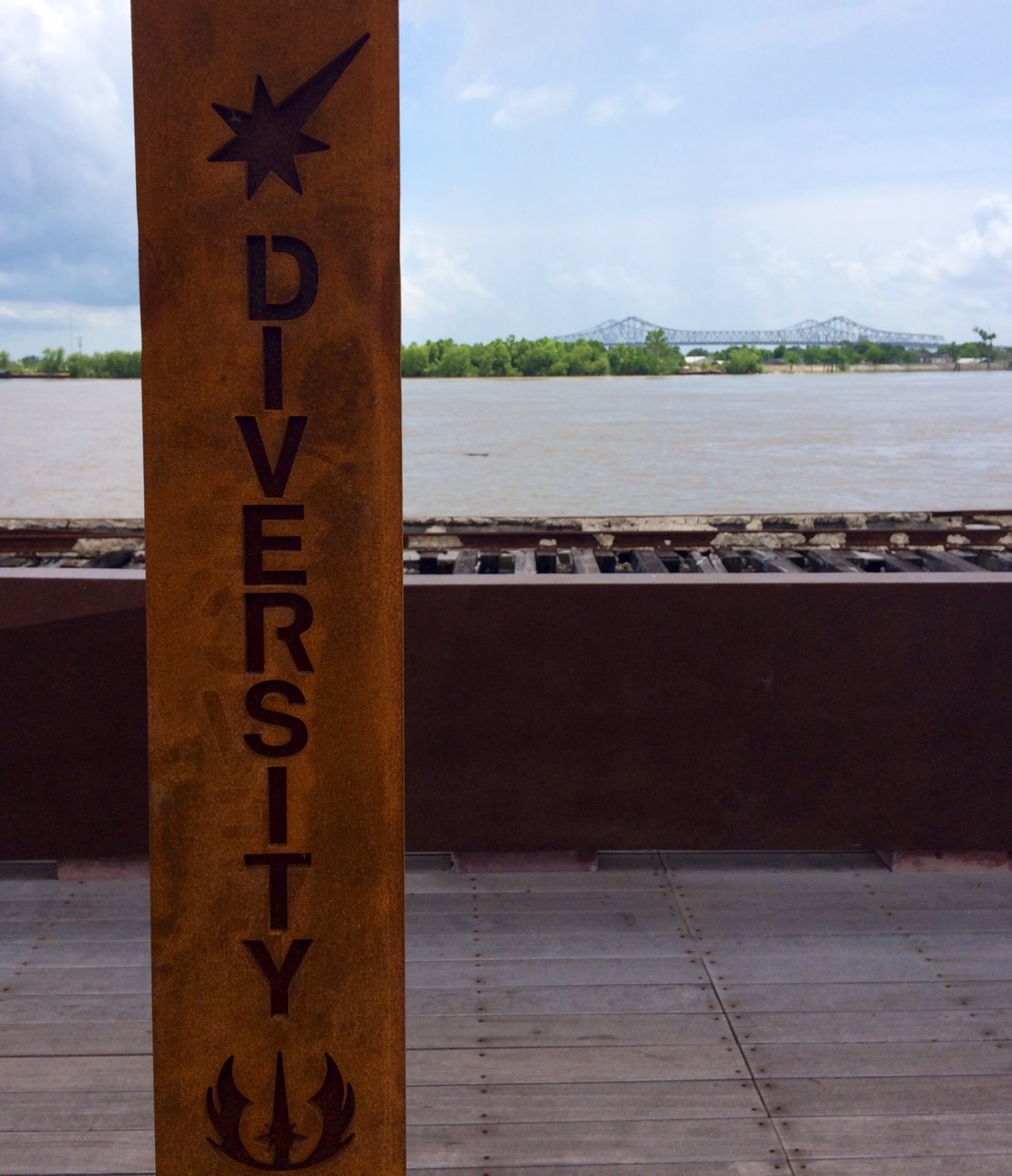
That quote in particular struck a chord, though I couldn’t quite put my finger on why. Perhaps a premonition of the experience I anticipated having the next four days? I’ve attended many festivals, conventions and conferences in the last two years. Saints and Sinners, with its combined queer and literary focus, was by far the most inspiring, entertaining, enlightening, and – (How do I say this? In Dutch the word is ‘gezellig’ – an almost untranslatable mix of cozy, warm and friendly.) I thought: this is what Christopher Isherwood meant when he wrote about his tribe.
 David Swatling